




10 incredible benefits of frankincense oil
Did you know that frankincense oil is one of the most ancient and valuable essential oils in the world? For thousands of years, it has been used in religious rituals or as a traditional remedy in ancient Asian medicine.
Today scientific research and clinical tests have proven its medicinal benefits for our health, the health of our skin and our overall well-being. In this article we will provide more information concerning the valuable properties of this essential oil. You will learn how to use it and what to be wary of when using it.

How is frankincense oil produced?
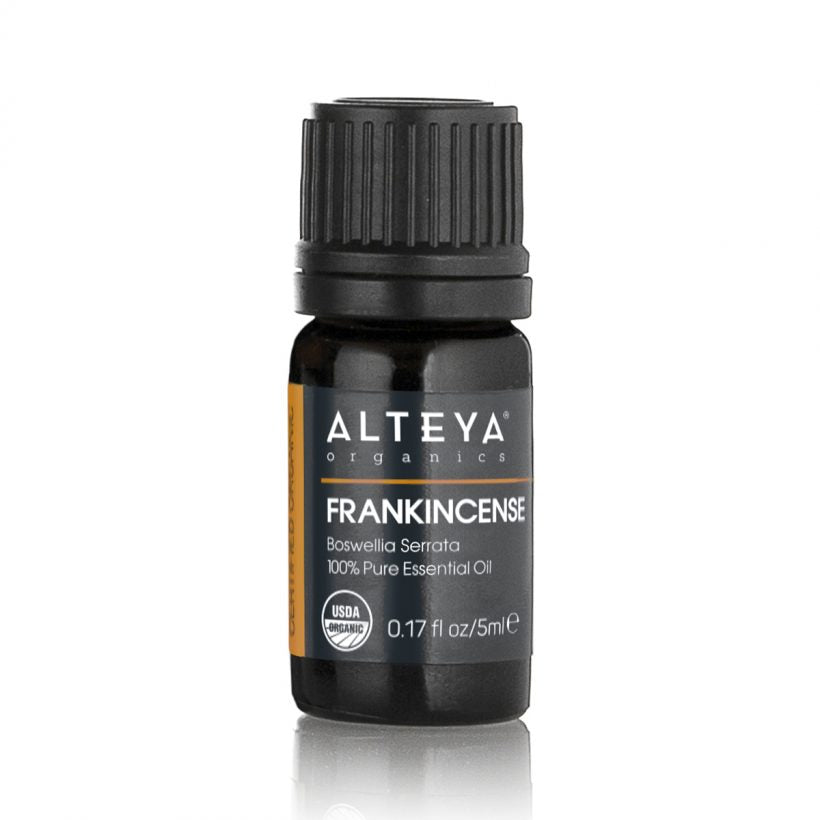
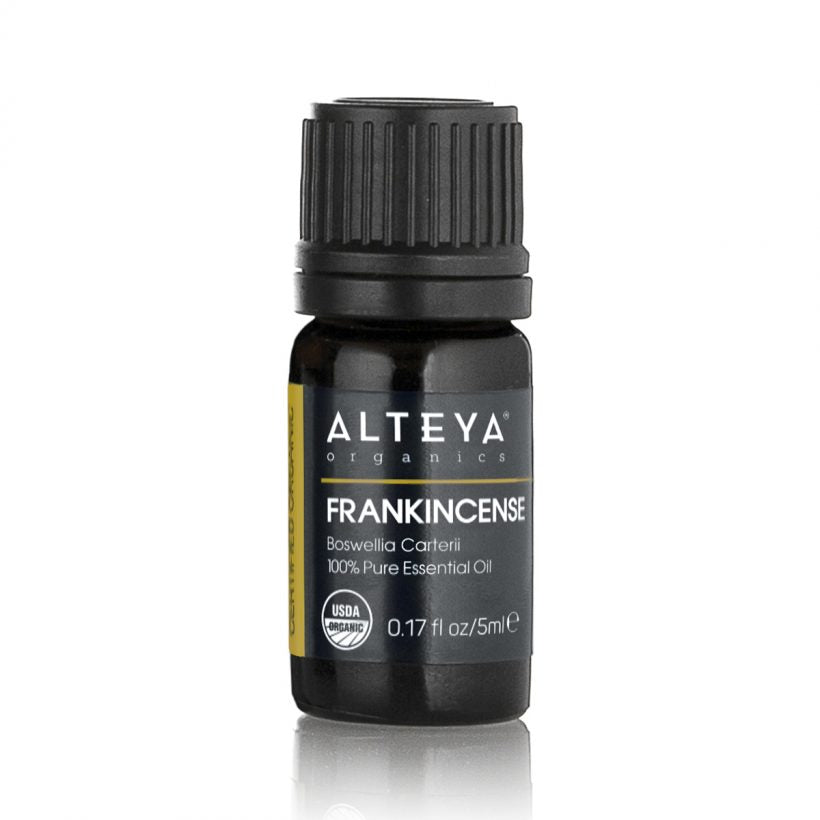
Just like most essential oils, frankincense oil is extracted through steam distillation. The raw material is a type of resin, contained in the bark of a Boswellia family tree, which grows in the dry regions of Africa, on the Arabian peninsular, and in India. A number of different trees are used for the production of frankincense oil, the most popular among which are Indian frankincense tree (Boswellia Serrata) and African frankincense tree (Boswellia Carterii).
Organic Frankincense oil
Origin and history
Ever since ancient times frankincense has been highly valued for its aroma and medicinal properties. First records of frankincense production and trade on the Arabian peninsular date back to about 5,000 years ago.
Traces of frankincense have been found in Egyptian tombs, which proves that it was an important substance used in different rituals and medical practices in ancient civilisations. During the 5th century BC, Herodotus referred to the methods of its production, available at that time, while during the 1st century AD, Plinius Secundus (Plini the Elder) included it in his work Naturalis historia (Natural History).
Frankincense also plays a significant role in the Christian religion. It was one of the gifts presented to baby Jesus by the three wise men. To this date this aromatic substance has been used in religious sermons in both the Catholic and the Orthodox churches.

Important ingredients of the frankincense oil
Just like all essential oils, this one is a combination of aromatic compounds, which acting together, give it its unique properties. It is rich in mono-, di- and sesquiterpenes, among which are α-pinene and limonene. These ingredients contribute to its rejuvenating and soothing properties. Due to its strong antioxidant activity, frankincense oil is efficient in capturing free radicals.(6)
10 benefits for our skin, health and mood
1. It reduces arthritis pain
Research shows that frankincense extract reduces inflammation and pain in patients with osteoarthritis.(5) It is believed that local application of the extract, diluted in a suitable base oil, is an effective therapy supporting the use of conventional anti-inflammatory drugs.(13)
2. It supports the immune system
In eastern cultures, frankincense oil is used to reduce symptoms of common cold and flu. In 2002, an experiment carried out by Egyptian scientists found that this substance stimulates the production of white blood cells, which play a key role in fighting infections. It is believed that this very mechanism explains how frankincense oil strengthens our natural defense reaction against diseases.(11)
3. It reduces stress and anxiety
Frankincense aroma has a soothing effect on the central nervous system. Inhaling frankincense oil induced fumes produced by aroma lamps or diffusers reduces heartbeat and blood pressure, and in this way it has the potential to reduce anxiety and to boost the mood.
It is interesting to note that this effect is not caused only by the pleasant aroma and the placebo effect. Scientific tests have proven that the chemical substances of incensole and incensole-acetate present in frankincense activate ion channels in the brain which support the relieve of symptoms of anxiety and depression.(1) This makes frankincense oil a valuable ally in the fight against stress and negative emotions.
For this very reason it is used in aromatherapy as a mood booster, for achieving deeper relaxation and as a valuable ingredient in meditation aroma mixtures.
4. It improves the quality of sleep
If falling asleep is difficult for you or if you keep waking up several times in the night – frankincense oil can be the natural solution for your problems. Its soothing aroma helps the body and mind relax and thus helps you fall asleep. It also supports the proper functioning of the airways, which further improves the quality of sleep. British scientists found that a combination of frankincense, mandarin and lavender essential oils improved the quality of sleep in 64% of all participants in a survey.(7)
5. It soothes some types of acne
Thanks to its antibacterial and anti-inflammatory properties, frankincense oil can be used in blemish-prone skincare. It is known that acne can be triggered by different causes – from hormonal changes and stress to dietary changes. Frankincense oil is beneficial in treating bacterial skin irritation.
6. It helps balance skin tone and reduces redness
In case you are trying to improve your uneven skin tone or eliminate red patches, frankincense oil can help. It soothes the skin, giving it an even tone and radiant appearance.(9)
This beneficial effect is also due to its anti-inflammatory properties.
7. It improves the elasticity of the skin
The regular use of frankincense oil in your skincare routine can improve your skin elasticity, making it firmer and better toned. It is due to the astringent effect of the plant extract.(2)
Research shows that frankincense stimulates the production of new cells and boosts the growth of healthy tissues.(9) In this way it helps you skin regain a youthful appearance and also reduces the visibility of fine lines and wrinkles. This makes frankincense oil an indispensable assistant in mature skincare routine.
8. It facilitates skin healing and recovery after skin burns
Due to the fact that frankincense boosts skin regeneration, it is just logical that it can be used as a remedy for skin burns. Its efficiency in such cases has been proven by a clinical investigation in Iran. It found that the extract of African frankincense has much similar effects to conventional skin burn ointments containing silver sulfadiazine.(4)
9. It helps stretchmarks fade away
Another remarkable benefit of this valuable extract is that it reduces the visibility of stretchmarks.(2) It stimulates the natural skin cell regeneration mechanisms and improves skin elasticity, which helps these unpleasant marks fade away. The regular use of a few drops of frankincense oil, diluted in a suitable base oil like jojoba or castor oil can make stretchmarks less visible and regain the smooth appearance of the skin.
10. It has antifungal and antibacterial effects
Frankincense oil has a marked antibacterial and antifungal effects.(3) That is why it can be used as an addition to natural home cleaning formulas. Its aroma combines well with hints of citrus like orange or lemon, which also have antibacterial properties. Research has shown that the combination of frankincense and myrrh is especially effective.(12)
Safety measures and possible side effects
Frankincense oil is considered to be safe when used appropriately and it has been used for centuries without any noticeable side effects. Yet, you need to keep in mind that essential oils are highly concentrated and frankincense oils is no exception. Thus, it should be, by all means, diluted in base oils and used for local application on the skin.
It is important to note that some people may experience allergic reactions, skin irritation or skin redness. In case you notice such symptoms, you had better stop using the oil and consult a specialist.
Pregnant women or those who are planning pregnancy should avoid using frankincense oil because there is research data suggesting a higher risk of miscarriage. It is wise to consult a specialist before introducing this essential oil in your daily skincare routine, especially in case you have some chronic medical conditions or if you are prone to allergic reactions.
Frankincense oil is a real treasure, which offers numerous benefits for the skin and it is also used to relieve even medical conditions like arthritis pain. The wide range of its valuable properties, from rejuvenation to reducing stress, make it an indispensable product that is worth being present in every home.
Make good use of its wonderful properties including it in your aromatherapy set or in your daily skincare routine.
Frequently asked questions
Does it help to relieve asthma symptoms?
There is research data suggesting that Boswellia acids have a positive effect on asthma treatment.(8) Yet, such clinical trials have been carried out with other types of extracts but not essential oils. Many people claim that frankincense oil has facilitated their breathing but further research is necessary to scientifically prove whether it has such an effect and what the mechanism of action is.
Is frankincense essential oil safe and suitable for internal use?
Organic frankincense essential oil is a pure extract, received through steam distillation from a type of resin that is not toxic. Nevertheless, we would advice you to consult a doctor or another expert if you consider taking such a course of action. Even purely natural substances might react with particular medication or to negatively affect some medical conditions.
Is it effective as a memory booster?
Scientific experiments on mice in 2016 intended to reveal the effects of frankincense on their memory. The results are quite promising – the mice that were given water extract of the plant demonstrated better ability to study and react to their environment.(10) Whether this effect would be similar in humans is yet to be investigated.
Resources:
1. Al-Harrasi, A. et al. (2019) “Distribution of the anti-inflammatory and anti-depressant compounds: Incensole and incensole acetate in genus Boswellia,” Phytochemistry, 161, pp. 28–40. Available at:https://doi.org/10.1016/j.phytochem.2019.01.007
2. Alraddadi, B.G. and Shin, H.-J. (2022) “Biochemical Properties and Cosmetic Uses of Commiphora myrrha and Boswellia serrata,” Cosmetics, 9(6), p. 119. Available at:https://doi.org/10.3390/cosmetics9060119
3. Al-Yasiry, A.R.M. and Kiczorowska, B. (2016) “Frankincense--therapeutic properties,” Postepy higieny i medycyny doswiadczalnej, 70, pp. 380–391. Available at:https://doi.org/10.5604/17322693.1200553.
4. Badr, P. et al. (2023) “Burn wound healing effect of a sterilized traditional formulation of Boswellia carteri vs. Silver sulfadiazine cream 1% in patients presenting second-degree burn wounds: A randomized, double-blind clinical trial,” Iranian journal of medical sciences, 48(2), pp. 137–145. Available at:https://doi.org/10.30476/IJMS.2022.91853.2307
5. Bannuru, R.R. et al. (2018) “Efficacy of curcumin and Boswellia for knee osteoarthritis: Systematic review and meta-analysis,” Seminars in arthritis and rheumatism, 48(3), pp. 416–429. Available at:https://doi.org/10.1016/j.semarthrit.2018.03.001
6. Borotová, P. et al. (2023) “Antioxidant, antimicrobial, and anti-insect properties of Boswellia carterii essential oil for food preservation improvement,” Horticulturae, 9(3), p. 333. Available at:https://doi.org/10.3390/horticulturae9030333
7. Dyer, J. et al. (2016) “The use of aromasticks to help with sleep problems: A patient experience survey,” Complementary therapies in clinical practice, 22, pp. 51–5
8. Available at:https://doi.org/10.1016/j.ctcp.2015.12.0068. Ferrara, T., De Vincentiis, G. and Di Pierro, F. (2015) “Functional study on Boswellia phytosome as complementary intervention in asthmatic patients,” European review for medical and pharmacological sciences, 19(19), pp. 3757–3762.
9. Hamidpour, R. et al. (2013) “Frankincense (乳香 Rǔ xiāng; Boswellia species): From the selection of traditional applications to the novel phytotherapy for the prevention and treatment of serious diseases,” Journal of traditional and complementary medicine, 3(4), pp. 221–226. Available at:https://doi.org/10.4103/2225-4110.119723
10. Hosseini-Sharifabad, M., Kamali-Ardakani, R. and Hosseini-Sharifabad, A. (2016) “Beneficial effect of Boswellia serrata gum resin on spatial learning and the dendritic tree of dentate gyrus granule cells in aged rats,” Avicenna journal of phytomedicine, 6(2), pp. 189–197.
11. Mikhaeil, B., Maatooq, G., Badria, F. and Amer, M. (2003) Chemistry and Immunomodulatory Activity of Frankincense Oil. Zeitschrift für Naturforschung C, Vol. 58 (Issue 3-4), pp. 230-238.https://doi.org/10.1515/znc-2003-3-416
12. de Rapper, S. et al. (2012) “The additive and synergistic antimicrobial effects of select frankincense and myrrh oils--a combination from the pharaonic pharmacopoeia: The antimicrobial effects of frankincense and myrrh oils,” Letters in applied microbiology, 54(4), pp. 352–358. Available at:https://doi.org/10.1111/j.1472-765X.2012.03216.x
13. Supplement and herb guide for arthritis symptoms (no date) Arthritis.org. Available at:https://www.arthritis.org/health-wellness/treatment/complementary-therapies/supplements-and-vitamins/supplement-and-herb-guide-for-arthritis-symptoms(Accessed: November 5, 2024).


Autor: Alteya Organics
At Altеya Organics, we combine the art of organic rose cultivation and distillation with skincare innovations. Thanks to our research and development team, we are proud to offer professional, nature-inspired skincare.
Read more

How to build a proper facial skincare routine?
Everyone would like to enjoy a healthy skin, but the truth is that achieving that aim takes constant and multifaceted care. The secret of a healthy skin does not lie in the expensive beauty salon p...
Read more
Ectoin – a natural wonder in modern skincare
Considered to be one of the most innovative substances in the world of natural cosmetics, Ectoin has reasonably attracted the attention of experts in the field of skincare. This unique molecule is ...
Read more
Leave a comment
This site is protected by hCaptcha and the hCaptcha Privacy Policy and Terms of Service apply.